Showing posts with label physicists. Show all posts

Wednesday, January 11, 2023

Mystery of the Dream and the Memory

"The Theory of Atomic Spectra" by E. U. Condon & George H. Shortley, taken from the Web site of Amazon (https://www.amazon.com/Theory-Atomic-Spectra-U-Condon/dp/0521092094/)

The memory about the book I hadn't remembered for decades suddenly appeared in my dream the night before last as the names of two co-authors, "Condon–Shortley." Even after waking up, I couldn't remember its title but thought it was probably a book about condensed matter physics. Searching the authors' names on the Internet, I found it to be a masterpiece, "The Theory of Atomic Spectra," published in 1935 [Note 1]. We can divide physics into two subfields: physics on condensed matter and that on particles and nuclei. Physics on atomic spectra belongs to the former. So, my thought was correct.

My university student days were soon after World War II and in a period of confusion, and many pirated editions of masterpieces about various topics in physics appeared in Japan. An upper-year student with a part-time job related to pirated edition publishers would often come to our classroom to advertise those editions. Once, he might have said about the bootleg version of this book, "Condon–Shortley is coming out. It's a classic book on the theory of atomic spectra." During a lecture on atomic spectra, the teacher might have said, "You can learn more about this in Condon–Shortley book." Further, I may have heard one of my classmates say, "I'm not sure if I should buy Condon–Shortley."

I majored in "atomic nuclei" and had no interest in "atomic spectra." So, I have neither wanted to read that book nor remembered it for more than 65 years after graduation. Nonetheless, I recalled the authors' names in a dream. Such is an extremely curious and mysterious phenomenon.

Notes
  1. On the publisher's website, it reads: When first published, a reviewer in Nature said that 'Its power and thoroughness leave the general impression of a work of the first rank, which successfully unifies the existing state of our knowledge, and will prove for many years a starting point for further researches and an inspiration to those who may undertake them.'
    (https://www.cambridge.org/jp/academic/subjects/physics/atomic-physics-molecular-physics-and-chemical-physics/theory-atomic-spectra)

Sunday, December 06, 2020

On Kamefuchi's Essay about Heisenberg and Yukawa (6)

References [25–28] of this article.

4 Different methods of theoretical physics research

Kamefuchi divides the methods of theoretical physics research into the "ascending type" and the "descending type" to explain why Heisenberg's and Yukawa's later studies were unfinished. In the "ascending type," the researcher "builds up the theory from the basic points." In the "descending type," he or she "sets a hypothetical principle at a high level far beyond the existing theoretical system and descends from there to try to deduce all the laws of physics. Kamefuchi adds, "In the latter method, one has to rely on intuition or analogy. Neither of these has objectivity or inevitability. So, mostly one goes astray." He then infers: Both Heisenberg and Yukawa achieved results by the former method in the first half of their career. However, they turned to the latter type in the second half, failing to complete the research.

Yoichiro Nambu also described a similar classification of research methods [25, 26]. Kamefuchi thinks that the research method can change between the first and the second half for one researcher. On the other hand, Nambu names them by the proper name of famous physicists as if a researcher uses a single method throughout his or her life. However, we should understand each of them to be the one related to the representative, successful research done by the physicist used for the naming. Nambu calls his categories "Yukawa mode" and "Dirac mode" in [25]. As an explanation, I will introduce a concise one in the book by Michio Kaku and Jennifer Thompson [27].
The Yukawa mode is deeply rooted in experimental data. Yukawa was led to his seminal idea of the meson as the carrier of the nuclear force by closely analyzing the data available to him. The Dirac mode, however, is the wild, speculative leap in mathematical logic that led to astonishing discoveries, such as Dirac's theory of antimatter or his theory of the monopole [...]. Einstein's theory of general relativity would fit into the Dirac mode. ([27] p. 85)

Later, Nambu modified this and divided his classification into three types. [26] The explanation for each is as follows.
  • Einstein mode (top-down): To create a theory by assuming that "nature should follow this principle." Example: Einstein's theory of gravity (general theory of relativity), made under the assumption that "in general, space may be curved."
  • Yukawa mode (bottom-up): To start from the working assumption that "behind the new phenomenon, there is some new field or particle, apart from deep reasons." Examples: Yukawa's meson theory and Pauli's neutrino hypothesis.
  • Dirac mode (from heaven): To assume that a mathematically beautiful theory should be true. Examples: Dirac's monopole theory, supersymmetry theory, and string theory, currently being explored.
Einstein's general theory of relativity, which was an example of the Dirac type at the stage of literature [25], was promoted to the independent one. As a result, the Einstein type (top-down) and the Yukawa type (bottom-up) have become equivalent to Kamefuchi's "descending type" and "ascending type," respectively. Nambu states about the examples of Dirac-type as follows. 'The existence of the monopole is now the natural consequence of the quantum field theory, but we still need to confirm it by observation. Studies of supersymmetry and string theories are currently in full swing, so we can say that it is "the heyday of Dirac mode" nowadays.' However, the success or failure of these theories is still unclear, and it is interesting to keep an eye on what a future comes for the high energy physics theory.

By the way, I wonder if Einstein's general theory of relativity is entirely top-down. This is because it is known that there was a thought experiment at the starting point for him to come up with this theory as quoted by Holton ([28], p. 78): "For him, at least in the vicinity, there is no gravitational field during the fall, for example, given an observer who falls freely from the roof." Kamefuchi does not state that Einstein's mode of thinking had been top-down since the time of the general theory of relativity. Instead, he writes that Einstein also turned to the use of the top-down method in the 30 years of his later life for trying unsuccessfully to unify the gravitational and electromagnetic fields.

Here I would like to add the story in Kaku and Thompson's book [27] that Nambu's friends named a type that combines the first two classifications by Nambu "Nambu Mode." They made this naming in commemoration of Nambu's 65th birthday (1985). I quote the related part below.
[...] This mode combines the best features of both modes of thinking and tries carefully to interprete the experimental data by proposing imaginative, brilliant, and even wild mathematics. The superstring theory owes much of its origin to the Nambu mode of thinking.
Perhaps some of Nambu's style can be traced to the clash of Eastern and Western influences represented by his grandfather and father. [...] ([27] p. 85)

Acknowledgement

I heartily thank Naoki Toyota, Professor Emeritus, Tohoku University, for his telling me that there is a story in Ref. [10] that Bohr criticized Pauli's lecture as well as for his other useful suggestions provided by email exchanges on the topic of this article.


References
  1. Y. Nambu, "Direction of particle physics," in Proc. Kyoto Int. Symp.: The Jubilee of the Meson Theory, Kyoto, Aug. 15–17, 1985, edited by M. Bando, R. Kawabe, and N. Nakanishi; Prog. Theor. Phys. Suppl. No. 85, 104 (1985).
  2. Y. Nambu, One Hundred Years of Elementary Particle Physics (International Institute for Advanced Studies, Kizugawa, Kyoto Prefect., 2000) in Japanese.
  3. M. Kaku and J. Thompson, Beyond Einstein: The Cosmic Quest for the Theory of the Universe (Oxford University Press, Oxford, N. Y., 1997; first edition, Bantam, 1987).
  4. G. Holton, "What, precisely, is "thinking"? ...Einstein's answer," in Einstein, History, and Other Passions (AIP Press, Woodbury, 1995) p. 74. [See also "On trying to understand scientific genius," in Thematic Origins of Scientific Thought: Kepler to Einstein, Revised edition (Harvard University Press, Cambridge, Mass., 1988) p. 371.]
(End)
Search word: Kamefuchi-2020

Thursday, October 22, 2020

On Kamefuchi's Essay about Heisenberg and Yukawa (5)

References [15, 18, 22] of this article.

3 Yukawa's tragedy

3.1 Yukawa's research at that time

Kamefuchi writes, "The lectures progressed, and Yukawa called up K's name for the presentation of his paper co-authored with collaborator K, "Space-time picture of elementary particles." K is Yasuhisa Katayama (1926–1978), familiar to those who know about Yukawa's later studies (as for the bibliographic information of the paper published in the proceedings, see Ref. [3] given in the first part of this article). This research belongs to the work of elementary domain theory that Yukawa worked on with coworkers in his later years. About this work, Yukawa writes in the "Preface" of Ref. [15], "I was able to formulate a theory in 1967 with the great efforts of Mr. Yasuhisa Katayama." Yukawa continued somewhat proudly, "The following year, I was able to publish a paper co-authored with Katayama and a paper with the additional coworker, Umemura." These papers are Refs. [16] and [17].

Three years later, Yukawa wrote Preface and "Part V Unified Theory of Elementary Particles" as the supervisor of Ref. [18]. In them, he frankly writes the reaction of academia to the theory of elementary domains and his own thought as follows:
In Part V, we decided to follow a path towards a unified theory. It will not be the only way, nor is it guaranteed to reach its goal. On the contrary, it is the path that many researchers consider to be the largest deviation from the legitimate one. ([18], Preface, p. vii)
If we proceed in this direction, we may, in the end, have to run into the problem of the quantization of space-time itself in some sense. The concept of the elementary domain itself may still be incomplete in that it assumes the Minkowski space behind it as a four-dimensional continuum. However, all the elucidation remains in the future. ([18] Part V, p. 608–609)

3.2 Impact and evaluation of Yukawa's research at that time

Looking up the number of citations of papers [16] and [17] by Yukawa and his coworkers on Google Scholar, we find the number 46 only for [17]. I have noticed from the number of citations of my own papers that Google Scholar's statistics are inaccurate. For example, if there are similar titles, they are sometimes wrongly regarded as the same paper. Therefore, for [16] and [17], I would like to use, instead of Google Scholar's, the numbers in the journal Progress of Theoretical Physics and at the Crossref site linked to it. Using the sum of the number of citations from these two sources (no duplication of citing papers between the two), it is 39 for [16] and 28 for [17]. Compared to Yukawa's Nobel Prize-winning paper [19], which has more than 2,400 citations (according to Google Scholar), the former numbers are small. However, there might be a possibility that Yukawa's work on the elementary domain will make new contributions to the development of particle theory in the future. I would like to quote an experts' view on this point.

Nicholas Kemmer (1911–1998), who was a Russian-born nuclear physicist working in Britain, described Yukawa's research after the 1940s in reference [20] as follows.
Yukawa devoted the greater part of his subsequent life as a research worker to the quest for a better, deeper fundamental theory. He published over twenty papers spanning a period of twenty years developing various approaches to this goal. Central to his thinking was the belief that the association of any elementary particle with a single geometrical point in space was in some deep sense mistaken; the key concept in many of his publications is the 'non-local field'. [...] We cannot see into the future and say with confidence that all the ideas presented in these papers are lacking in any grains of deeper truth that we do not yet perceive. And we cannot measure the stimulation that readers of his papers on the way to developing ideas of their own may have received. Even so it is a fact that in present day work one would be hard put to find reference to or influence of his later publications.
Kemmer's words are a modest statement that Yukawa's second half research was barren.

Professor Emeritus Laurie Brown, who is an American theoretical physicist and historian on quantum field theory and particle physics, stated in Ref. [21] as follows.
The idea of nonlocal fields (which is to be distinguished from the idea of local fields having nonlocal interaction) gradually became a theory of elementary particles with internal structure. By the late 1960’s it was superseded by Yukawa’s concept of "elementary domain", based upon the quantization of the classical continuously deformable body. These fundamental ideas do not play a major role in current theoretical physics but may well be vindicated in a future physics.
Here, the last words after "but" give Yukawa fans (I am one of them) hopes for the future. However, Brown, similarly to Kemmer, seems to have added these words in honor of Yukawa, who had established meson theory and the method of particle physics at a young age.

Sho Tanaka (1928–2019), a particle physicist and emeritus professor at Kyoto University, introduces Japanese-born researchers' evaluation of Yukawa's postwar research together with his own views [22]. Here, I would like to quote Yoichiro Nambu's words about "Dr. Yukawa's postwar research activities," which seem to be the outspoken and sharpest criticism.
Unfortunately, [Yukawa's postwar research] was not very fruitful. Aside from the relentless efforts he made to understand elementary particles as things with a geometric spread, the content and method seem to have been too naive. With the development of the gauge field theory, the geometrical view has become very important, and there is a possibility that the internal quantum numbers may be reduced to geometry. However, it cannot be said that his idea was a seed of these developments. The influence he had on younger Japanese scholars since the theory of mesons was more indirect. (Quoted from [23]; [22] p. 311)
Tanaka himself points out in Ref. [24] that the D0 brane of string theory is close to the idea of ​​Yukawa's elementary domain. However, this may be one of the developments that Nambu considers as independent of Yukawa's idea.

Next time, I would like to think about different research styles of theoretical physics in connection with Kamefuchi's thought about the common reason why the research of Heisenberg and Yukawa around the time of the "tragedy" ended unfinished.

References
  1. H. Yukawa, Hideki Yukawa Self-Selected Works Vo. 2 (Asahi Shimbun, Tokyo, 1971) in Japanese.
  2. Y. Katayama and H. Yukawa, "Field theory of elementary domains and particles. I," Prog. Theor. Phys. Suppl., 41, 1 (1968).
  3. Y. Katayama, I. Umemura, and H. Yukawa, "Field theory of elementary domains and particles. II," Prog. Theor. Phys. Suppl., 41, 22 (1968).
  4. H. Yukawa, supervisor, Iwanami Lectures: Basics of Modern Physics Vol. 11, Elementary Particle Theory (Iwanami, Tokyo, 1974) in Japanese.
  5. H. Yukawa, "On the interaction of elementary particles. I," Proc. Phys.–Math. Soc. Japan (3) 17, 48 (1935).
  6. N. Kemmer, "Hideki Yukawa. 23 January 1907–8 September 1981," Biographical Memoirs of Fellows of the Royal Society, 29, 661 (1983). JSTOR, https://www.jstor.org/stable/769816. Accessed July 30, 2020.
  7. L. M. Brown, "Yukawa, Hideki," in Complete Dictionary of Scientific Biography (Charles Scribner's Sons, New York, 2008); online version of this article available at
    https://www.encyclopedia.com/people/science-and-technology/physics-biographies/hideki-yukawa. Accessed July 31, 2020.
  8. S. Tanaka, Hideki Yukawa and Einstein (Iwanami, Tokyo, 2008) in Japanese.
  9. Y. Nambu, "Dr. Yukawa and Physics in Japan," Kagaku 52, No. 2 (1982) in Japanese.
  10. S. Tanaka, "From Yukawa to M-theory," in Proc. Int. Symposium on Hadron Spectroscopy, Chiral Symmetry and Relativistic Description of Bound Systems, Nihon Daigaku Kaikan, Feb. 24-26, 2003; KEK Proceedings 2003-7, edited by S. Ishida et al. (KEK, Tsukuba, 2003) p. 3; also available as arXiv:hep-th/0306047.
(To be continued)
Search word: Kamefuchi-2020

Friday, October 09, 2020

On Kamefuchi's Essay about Heisenberg and Yukawa (4)

Reference [12] of this article.

2 Heisenberg's tragedy (continued)

2.6 Impact of Heisenberg's research at that time

About the research of Heisenberg and Yukawa at the time of the event mentioned in the essay, Kamefuchi wrote, "Unfortunately, both the studies were unfinished." I'll write later about what he wrote as a common reason for the incompleteness of them. Even though Heisenberg's research at that time was incomplete in itself, the concepts used in it seems to have had a considerable positive effect on other researchers. Concerning this, I would like to quote the description by Professor Cao of Boston University, who specializes in the history of science.
 At the 1958 Rochester Conference on high-energy nuclear physics held in Geneva, Heisenberg invoked the idea of a degenerate vacuum to account for internal quantum numbers, such as isospin and strangeness, that provide selection rules for elementary particle interactions (1958).*
 In an influential paper submitted in 1959,** Heisenberg and his collaborators used his concept of a degenerate vacuum in QFT [quantum field theory] to explain the breaking of isospin symmetry by electromagnetism and weak interactions. [...]
 Heisenberg's degenerate vacuum was at the time widely discussed at international conferences. It was frequently quoted, greatly influenced field theorists, and helped to clear the way for the extension of SSB [spontaneous symmetry breaking] from hydrodynamics and condensed matter theory to QFT. ([12] p. 283)
The word "degenerate vacuum" that appears many times in the above quote is closely related to the SSB (spontaneous symmetry breaking) in the last sentence. The reference cited at the place of the symbol * is the reference [2] in Part 1 of the present article, and the paper cited at ** is the reference [8] in Part 2. The former is the lecture of "Tragedy" published in the proceedings, and the latter is the paper published later in collaboration with young researchers.

By the way, if you look up the number of citations of these papers on Google Scholar, it is 16 for the former and 226 for the latter. Cao uses the words "frequently quoted" for Heisenberg's work at the time. However, the above citation numbers are much smaller than those of Heisenberg's famous papers. Namely, the citation number for the Nobel Prize-winning paper on the formulation of quantum mechanics based on matrices [13] is 1709, and that for the work on the uncertainty principle [14] is 4697. (All the citation numbers are as of July 27, 2020.) The reason for the small citation numbers for the research during the period of "tragedy" seems that it did not succeed as the whole concept.

Speaking of the application of SSB to particle physics, I remember that the reason for receiving the Nobel Prize by Yoichiro Nambu was "discovery of the mechanism of SSB in particle physics." So, I have thought that it was almost Nambu's originality. However, in fact, Heisenberg's research had an impact on Nambu. About this, I make here a bit long quote from Cao's book (numbers representing Nambu's papers cited are omitted).
 Nambu's work on superconductivity led him to consider the possible application to particle physics of the idea of non-invariant solutions (especially in the vacuum state). [...]
 [...]
 [...]
 It is of interest to note the impact of Dirac and Heisenberg on Nambu's pursuing this analogy. First, Nambu took Dirac's idea of holes very seriously and viewed the vacuum not as a void but as a plenum packed with many virtual degrees of freedom. This plenum view of the vacuum made it possible for Nambu to accept Heisenberg's concept of degeneracy of the vacuum, which lay at the heart of SSB. Second, Nambu was trying to construct a composite particle model and chose Heisenberg's non-linear model, 'because the mathematical aspect of symmetry breaking could be mostly demonstrated there', although he never liked the theory or took it seriously.

Next time, I would like to write about a paper related to "tragedy" in the case of Yukawa.

References
  1. T. Y. Cao, Conceptual Developments of 20th Century Field Theories, (Cambridge University Press, Cambridge, 1997; second edition available, 2019).
  2. W. Heisenberg, Über quantentheoretische Umdeutung kinematischer und mechanischer Beziehungen, Z. Physik 33, 879 (1925).
  3. W. Heisenberg, Über den anschaulichen Inhalt der quantentheoretischen Kinematik und Mechanik, Z. Physik 43, 172 (1927).
(To be continued)
Last modified Jan 22, 2021.

Search word: Kamefuchi-2020

Thursday, September 17, 2020

On Kamefuchi's Essay about Heisenberg and Yukawa (3)

References [9, 10, 11] of this article

2 Heisenberg's tragedy (continued)

2.5 Reasons for Pauli's Rebellion

Kamefuchi writes, "Pauli was a close friend of Heisenberg's since student days and coworker of this problem until three months ago. Why did he go on such outrage in a place where prominent researchers in particle physics lined up?"

Here are the words "three months ago." These probably come from the fact that Pauli had been to the United States for three months before this international conference. However, Pauli departed for the United States, according to Heisenberg's autobiography [8], a week plus a few weeks after Christmas 1957, namely around late January 1958. Thus, the duration from this time of departure to the international conference should be about five months.

Kamefuchi then provides an answer to the above question of his own by quoting the explanation (the part in the quotation marks below) given to him later by Professor K. Broiler (at the University of Bonn) and attaching a little suspicious comment.
"In the United States, Pauli perhaps proudly spoke about their research but got strong objections from young American geniuses to come to think that it was a difficult job. Thus, he would have wanted openly to express to the excellent people at the conference that he no longer believed in their own theory." This seems to mean that Pauli sacrificed his friend's honor for his own ...
Broiler's explanation is a presumption, but there is a document [9] (this reference is academic, unlike Polkinghorne's book, and the following quote is in a footnote) that assertively states a similar thing as follows.
Although Pauli drafted the first preprint, entitled 'On the Isospin Group in the Theory of the Elementary Particles,' he withdrew from further collaboration in January 1958, after he encountered severe criticism and opposition to the theory from the U.S. physicists at the American Physical society meeting in New York; thus Heisenberg was left to work out the details of the theory with younger collaborators (Dürr et al., 1959). ([9] p. 1120)
The reference "Dürr et al., 1959" at the end of the above quote looks like the source of this entire description but is not such. It is the paper (also mentioned in the previous part of the present series as Ref. [8]) of the result of Heisenberg's continued research with young collaborators. Thus, the quote does not specify the source that Pauli received severe criticism from the U.S. physicists. However, it hints that the time of Pauli's decision to withdraw from the joint research with Heisenberg was early in the period of his visit to the United States."

By the way, there was an important person who severely criticized Pauli's lecture in the United States besides American physicists. In a collection of essays [10] by Freeman Dyson, an American theoretical physicist and mathematician born in England, we find this description:
Pauli happened to be passing through New York, and was prevailed upon to give a lecture explaining the new idea [of Heisenberg and Pauli] to an audience that included Niels Bohr, who had been mentor to both Heisenberg and Pauli [...]. Pauli spoke for an hour, and then there was a general discussion during which he was criticized sharply by the younger generation. Finally, Bohr was called on to make a speech summing up the argument. "We are all agreed," he said, "that your theory is crazy. The question which divides us is whether it is crazy enough to have a chance of being correct. My own feeling is that it is not crazy enough." ([10] pp. 105-106)
The statement here that Pauli "was criticized sharply by the younger generation" underscores Broiler's presumption as well as the description in Ref. [9]. Moreover, Pauli's teacher, Niels Bohr, criticized Pauli. It is a little difficult to understand that Bohr's words, "Not crazy enough," are a harsh criticism. Dyson adds the following explanation in his next paragraph (I tried to shorten it, only finding that Dyson's text was like a polished jewel and that it was impossible to do so).
When the great innovation appears, it will almost certainly be in a muddled, incomplete, and confusing form. To the discoverer himself it will be only half-understood. To every body else it will be a mystery. For any speculation that does not at first glance look crazy, there is no hope. ([10] p. 106)
Concerning Pauli's withdrawal from the joint research with Heisenberg, the former wrote to the latter during the former's stay in the United States. This is described in Heisenberg's autobiography [11] as follows (Wolfgang in the quotation refers to Pauli):
Then we were divided by the Atlantic, and Wolfgang's letters came at greater and greater intervals. [...] Then, quite suddenly, he wrote me a somewhat brusque letter in which he informed me of his decision to withdraw from both the work and the publication [of our common project]. ([11] p. 235)
This story is in a chapter "The Unified Field Theory" of the autobiography, concluding by the following sentence:
Toward the end of 1958 I received the sad news that he [Wolfgang] had died after a sudden operation. I cannot doubt but that the beginning of his illness coincided with those unhappy days in which he lost hope in the speedy completion of our theory of elementary particles. I do not, of course, resume to judge which was the cause and which the effect. ([11] p. 236)
If you read the above statement only, you would feel sad. However, as Kamefuchi mentioned referring to the Japanese translation of Heisenberg's autobiography, there was the following facts. "A few weeks after the meeting, both of them were invited guests at a summer school in Varenna on Lake Como, Italy. Pauli was friendly to Heisenberg at that time." Also there, Pauli said to Heisenberg, "I think you are doing right to continue working on these problems. As for me, I have to drop out. ..." These give us a feeling of relief.

How important was Heisenberg's research at that time in the subsequent progress of theoretical physics? I would like to start the next part with such a story.

References
  1. H. P. Dürr, W. Heisenberg, H. Mitter, S. Schlieder, and K. Yamazaki, "Zur Theorie der Elementarteilchen," Z. Naturf. 14a, 441 (1959).
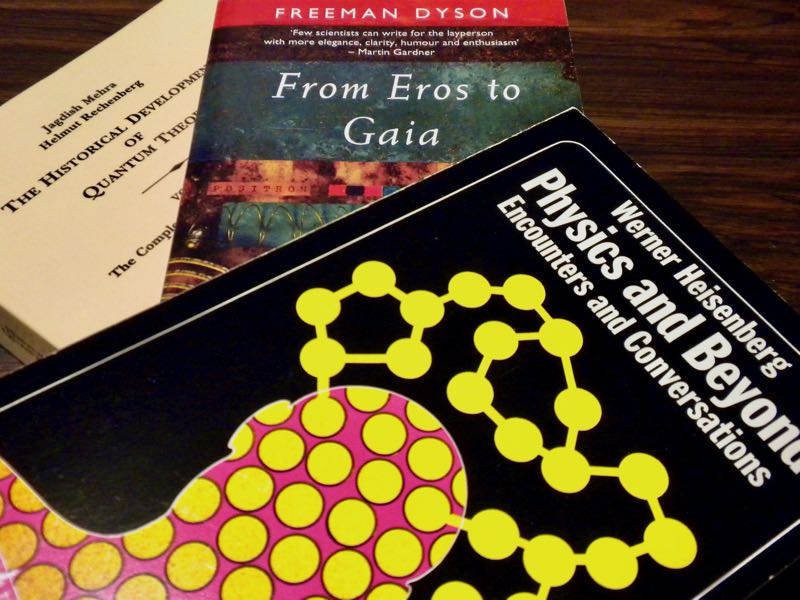
  2. J. Mehra and H. Rechenberg, The Historical Development of Quantum Theory, Volume 6, Part 2 (Springer, New York, 2001). [Note: I happened to have this book because I was attending the "Hideki Yukawa Study Group," once held at the Osaka Science Museum, and thought that it might be useful for discussions there.]
  3. F. Dyson, From Eros to Gaia (Penguin, London, 1993; first published by Pantheon, New York, 1992). [Note: When I was still working, I recommended this book to my colleague Naoki Toyoda (currently Professor Emeritus of Tohoku University). This time I emailed him about the topics related to the present article. Then, he taught me back the presence in this book of the part quoted in the text.]
  4. W. Heisenberg, Physics and Beyond: Encounters and Conversations, translated from German by A. J. Pomerans (Harper & Row, New York, 1972); original German edition, Der Teil und das Ganze: Gespräche im Umkreis der Atomphysik (R. Piper, Munich, 1969); Japanese version, Bubun to Zentai, translated by K. Yamazaki (Misuzu-Shobo, Tokyo, 1974; new edition 1999).
(To be continued)
Search word: Kamefuchi-2020

Sunday, September 06, 2020

On Kamefuchi's Essay about Heisenberg and Yukawa (2)

D. C. Cassidy's Uncertainty: The Life and Science of Werner Heisenberg.

2 Heisenberg's tragedy (continued)

2.3 Heisenberg's research at that time

Kamefuchi calls Heisenberg's research at that time "monistic field theory of elementary particles" and explains it as a big idea to derive all elementary particles starting from a single field (or equation). Then, Kamefuchi stated as follows: "I first learned of this in a newspaper, so he probably made a press conference and announced it. At that time, he might have used the adjective 'universal' for the basic equation, and it was erroneously freported as "the equation of the cosmos" in Japan."

I also saw the newspaper article about this research of Heisenberg and wrote it down in the diary at that time. It was just before my graduation from university. The diary reads:
February 27, 1958
I have found the following article in the Asahi Shimbun:
[Göttingen (West Germany) 25th UP=Kyodo] At the University of Göttingen on the 25th, Professor Heisenberg, Nobel Prize winner in physics of West Germany, gave a lecture entitled "Advancement of Elementary-Particle Theory." He announced that the research group led by him made research on "unified field theory" and found a basic equation that could explain all laws of physics without exception. The theory was the one that Dr. Einstein also thought about. ...

March 13, 1958
[Here is the clipping of the Asahi Shimbun article entitled "This is the equation of the cosmos." It showed the basic formula of elementary particles found by Heisenberg and his coauthors.]
I posted the copy of the diary on a page [5] of my website and destroyed the original diary. So, I do not have the clipping of "This is the equation of the cosmos" but will show the formula copied from another source later. According to the first newspaper article, Heisenberg did not hold a press conference as Kamefuchi supposed, but newspaper reporters listened to his lecture at the University of Göttingen and wrote about it. This is also clear from the following description in the biography of Heisenberg written by Cassidy [6]:
The distribution [of the preprint on work made by Heisenberg and Pauli] was set for February 27, 1958. [...]

Three days before the preprint was to be distributed, Heisenberg announced the new formula in a lecture at the University of Göttingen physics institute. ([6] p. 542)
According to the above description, the day of the lecture was 24th local time, which is different from the date of 25th in the Asahi Shimbun. Is this difference because Asahi Shimbun did not correct the time difference for the news distributed by "UP = Kyodo"?

2.4 "The equation of the cosmos" was not a mistranslation

The description in Cassidy's book continues as follows:
An eager reporter in the audience relayed word of a sensational new "world formula" around the world. One enthused press agent proclaimed, "Professor Heisenberg and his assistant, W. Pauli, have discovered the basic equation of the cosmos!" ([6] p. 542)
This reveals that overseas newspapers also used the term "basic equation of the cosmos," and the expression in the Asahi Shimbun was not a mistranslation.

The Asahi Shimbun separately reported the equation later than the news of the lecture at Göttingen University. Sentences that follow in Cassidy's book explain this to some extent:
Two months later, more than 1800 listeners turned out to hear Heisenberg reveal the secret of the cosmos in the same auditorium on the occasion of Max Planck's one-hundredth birthday. During his highly technical talk, Heisenberg carefully wrote his new equation on the overhead projector in the darkened room:
([6] p. 542)
Heisenberg did not reveal the formula in his lecture at the University of Göttingen in February but only its name. He wrote the equation in another occasion mentioned in the above quote. However, the fact that the second lecture was two months later than the first is not consistent with the time when the Asahi Shimbun reported the equation. The second lecture was to celebrate the 100th anniversary of Planck's birth. So, I looked up his birthday and found that it was April 23. [7] This is consistent with the words, "Two months later," in the above quote. However, it is impossible for the Asahi Shimbun dated March 13 to report the lecture contents of April 23. The lecture celebrating 100 years of Planck's birth might have been made about 40 days earlier than his birthday. Despite this, Cassidy might have imagined that the second lecture celebrating Planck's birth should have been around his birthday.

The basic equation of the cosmos quoted here is the same as that in Cassidy's book but copied from a paper co-authored by Heisenberg and young researchers [7]. I will describe later how I learned of this paper.

Polkinghorne describes Heisenberg's speech at the conference in a little more specialized style than Kamefuchi as follows:
[Heisenberg] had conjectured a 'non-linear spinor equation', whose solutions he thought would correspond to the structure of matter as it was then known. Not only was his equation hard to work with, but in the course of the attempt use was made of the dangerous concept of an infinite metric, something which could result in the appearance of unphysical ghosts. ([4] p. 77)
Heisenberg's equation still had problems though he confidently showed it at the University of Göttingen.

Pauli was a collaborator in Heisenberg's research at that time, as mentioned in the first two quotes from Cassidy's book. Why did he take a rebellious attitude at the international conference? I would like to see this point next.

References
  1. J. C. Polkinghorne, Rochester Roundabout: The Story of High Energy Physics, (W. H. Freeman, New York, 1989) p. 77.
  2. T. Tabata "From Youth Diaries: University Days (5)" (2003), in the Web site IDEA and ISAAC.
  3. D. C. Cassidy, Uncertainty: The Life and Science of Werner Heisenberg (W. H. Freeman, New York, 1991).
  4. Max Planck: Biographical in The Nobel Prize, the Web site of the Nobel Foundation.
  5. H. P. Dürr, W. Heisenberg, H. Mitter, S. Schlieder, and K. Yamazaki, "Zur Theorie der Elementarteilchen," Z. Naturf. 14a, 441 (1959).
(To be continued)
Search word: Kamefuchi-2020

Thursday, August 20, 2020

On Kamefuchi's Essay about Heisenberg and Yukawa (1)

Kamefuchi's essay published in the magazine Tosho

1. Introduction

Recently, I read the essay "The life of heroes" [1] by theoretical physicist and Professor Emeritus of the University of Tsukuba, Susumu Kamefuchi. The heroes mean here two giants in his field, Werner Heisenberg and Hideki Yukawa. What the author writes is "witness testimony" of the heroes' tragedies in their later years.

Heisenberg's tragedy occurred at the International Conference on High Energy Physics held at CERN in July 1958. The chairperson Pauli began to attack violently against his lecture, denying his study [2] altogether.

Yukawa's tragic incident happened at the International Conference on Particles and Fields held at the University of Rochester in August 1967. He was chairing a session, and his collaborator K was going to give a talk on the paper [3] co-authored with the former. Then, most of the audience stood up from their seats and left the room.

The author writes that he was worried about degrading the heroes, but that he recalled it essential to convey the truth.

In the present article, I describe and discuss some of the things I learned from other sources in connection with Kamefuchi's essay.

2 Heisenberg's tragedy

2.1 Description in Polkinghorne's book

Kamefuchi begins to write the stories saying, "these seem not much talked about." However, I recently read the same story about Heisenberg in a book [4]. The author of the book is a British theoretical physicist, theologian, and Anglican priest, Polkinghorne. He describes twenty international conferences on high energy physics from 1950 to 1980 to make this book a unique history book of this field of research. In the book, Polkinghorne writes in a slightly more detailed manner than in Kamefuchi's essay by citing, from the proceedings, Pauli's words of the attack on Heisenberg's speech. The book also has a photo of Pauli at that time, with the caption including his remark, "No credits for the future," on Heisenberg's speech. The story ends with the following words, which are sympathetic to Heisenberg.
It was a scene at once farcical and sad. Justification lay with the sceptical Pauli but Heisenberg was one of the greatest physicists of the twentieth century who should have been able to enjoy a more dignified close to his career. ([4] p. 77)
Readers of this article may wonder that the book on the history of physics contains emotional words, so I would like to add some explanations about the character of this book. This is not a textbook with an objective description or a non-emotional scholarly book, but a book for the general public. (The general public here might be limited to those who are mainly interested in science. I read this book as a person who thinks high energy physics as one of his hobbies.) Thus, the descriptions in this book are rather light-hearted and make fun reading materials that convey the atmosphere of the conference and the characteristics of famous scholars. We can also infer the nature of this book from the fact that the title and subtitle include the words "roundabout" and "story," respectively.

2.2 Chair Pauli's assault

Kamefuchi describes the chair Pauli's behavior as follows [1]: "He stood up, spoke in place of the speaker, behaved increasingly violent, and got so abusive as I have never heard in a physics conference." Some may wonder: Why did no participants protest the chair's behavior? The answer can be imagined from the following. Before the above description, Kamefuchi writes as follows: At the beginning, the chair Pauli, who was well known for his harshness, expressed the following introductory words, "I don't think there are any new ideas, but I'll open the session anyway."

Polkinghorne writes these Pauli's words in more detail and once again gives his personal opinion:
It would be of no use waving your hands in front of him and expressing the hope that it would all work out right in the end. ([4] p. 77)
At this point, Pauli already brought the entire audience to his knees, and no one could dare to advise him, who was famous for his effective spiciness.

References
  1. S. Kamefuchi, Tosho No. 859, pp. 18–22 (2020).
  2. W. Heisenberg, "Research on the non-linear spinor theory with indefinite metric in Hilbert space" in 1958 Annual International Conference on High Energy Physics at CERN, pp. 851–857 (CERN, Geneva, 1960).
  3. Y. Katayama, "Space-time picture of elementary particles" in Proceedings of the 1967 International Conference on Particles and Fields, Ed. C. R. Hagen, G. Guralnik and V. A. Mathur (Interscience, New York, 1967) p. 157.
  4. J. C. Polkinghorne, Rochester Roundabout: The Story of High Energy Physics, (W. H. Freeman, New York, 1989) p. 77.
(To be continued)
Serch word: Kamefuchi-2020

Monday, January 14, 2019

A Minuscule Relationship between Leon Lederman and Me

On October 5, 2018, I read the following sad news on a Web page of physicsworld:
Leon Lederman, the US particle physicist who shared the 1988 Nobel Prize for Physics with Melvin Schwartz and Jack Steinberger, died on 3 October aged 96.

I happened to receive a letter type-written by Leon Lederman's secretary and signed by Lederman because I wished in 1979 to visit Fermilab, where he was the director at that time. I submitted his letter along with other overseas travel documents to the administrative department of the Radiation Center of Osaka Prefecture. So, I now have its Xerox copy only (see the photo).

Monday, July 13, 2015

From Fujioka's Fluid Drop Model of Atoms to Einstein–Arakatsu Relationship

I have made a lot of exchanges with Bill Streifer (a researcher and freelance journalist on Intelligence, nuclear work and North Korea) at the Quora site from July 9 to 13, 2015. Most part of our exchanges is reproduced here by Bill's permission.


Bill: Was Prof. Yoshio Fujioka's "fluid drop" model of the atom known as ekiteki?
And if so, why?

Tatsuo: I haven't learned about Yoshio Fujioka's "fluid drop" model of the atom but guess that if he proposed such a model, it should have been called "ekiteki" model. "Ekiteki" is the Japanese word for "fluid drop" (eki=fluid, teki=drop).

Bill: Prof. Ayao Kuwaki was a Japanese scientist and a friend of Albert Einstein. When did he die, exactly?

Tatsuo: According to the information page of him in "Wikipedia" (Japanese edition), Ayao Kuwaki was born on September 9, 1878, and died on May 16, 1945.

Bill: At the end of the war, an American airman met a man who claimed to be a student of Einstein in Germany. When I learned of Kuwaki, I suspected it might have been him. But now I see that's not possible since Kuwaki died in May 1945 and the "meeting" took place in September 1945.

Tatsuo: Sure, the student should not have been Kuwaki.

Bill: He might not have been a graduate student of Einstein, but he may have attended Einstein's lectures in Germany. Can you guess who he might have been? [And he lived in northern Korea in 1945!] An Einstein scholar is not willing to guess.

Tatsuo: I have no idea about that person.

Bill: If you provide a number of possibilities, I'll check each one. Did Hideki Yukawa study under Einstein?

Tatsuo: No, Yukawa didn't study under Einstein, but they met each other for the first time in Princeton on the former's return trip from Europe in 1939.

Bill: Einstein wasn't in Germany very long. I wonder if any Japanese or Korean scientists studied under Einstein when he taught there, or even attended his lectures.

Tatsuo: The Japanese physicist Jun (Atsushi) Ishiwara seems to have studied under Einstein in Germany (石原純 - Wikipedia). Ishiwara worked as an interpreter when Einstein visited Japan in 1922.

Bill: Thanks. Did Einstein have other Japanese students or followers in Germany? Kuwaki appears to be a little too old. I'm looking for a Japanese scientist who lived until 1946 at least.

Tatsuo: I don't think that Einstein had other Japanese students or followers in Germany.

Bill: I know of another.

Tatsuo: You Know? Who is he?

Bill: Dr. Bunsaku Arakatsu.

Tatsuo: Oh, Bunsaku Arakatsu was a teacher of my teacher and an experimental physicist. So, I didn't think he had studied under Einstein. Wikipedia page for him (Japanese edition) writes that he studied in Europe (Berlin, Zurich and Cambridge) for two years from 1926. It must have been a short time during this period that he studied under Einstein. By the way, his look is similar to Einstein's in some photos of him.

Bill: Can you find any photos of Einstein and Arakatsu together? If you can, please send them to photografr7@yahoo.com.
Is your teacher still alive? If so, could you ask him if Arakatsu or Yukawa visited Konan (Hungnam), Korea during the war? By the way, Konan and Hungnam are the same place, Konan is the Japanese pronunciation and Hungnam the Korean pronunciation.
You might also be interested in knowing that my article about an Austrian chemist who worked at Konan for more than two years (1935-1937 & 1940), will appear in a book being published by the University of Vienna Korean Dept. later this summer. The name of my article is A Letter from Korea.

Tatsuo: I don't have any photo of Arakatsu.
My teacher Kiichi Kimura at Physics Department, Kyoto University died in 1992. I haven't heard of Arakatsu's or Yukawa's visit to Hungnam (Konan), Korea. However, Arakatsu was associated with another Konan. Namely, he was the president of Konan University in Kobe, Japan, after his retirement from Kyoto University. Konan of Korea and Konan of the university in Kobe are different from each other when written in Chinese characters. The former Konan is written as 興南, and the latter, 甲南.
I have not so much interest in the history of science in Korea. However, if you write about some history of physics in Japan, I would like to read it very much.

Bill: I am familiar with Kimura. I am also aware that Konan, Japan is different than Konan, Korea.

Tatsuo: May I quote our exchanges made here these days in one of my blog sites written in English? Some friends of mine might be much interested in our exchanges.

Bill: Yes, that would be fantastic. And if anyone has any questions or comments, they can contact me directly at bill.streifer@gmail.com.

Tatsuo: Thanks a lot for your permission.

Bill: Stay in touch.

—A few days later we had additional exchange as given below.—

Bill: You can add this: According to page 15 of the book Uranium Matters: Central European Uranium in International Politics, 1900–1960 by Zbyněk A. B. Zeman and Rainer Karlsch, the Japanese physicist, Dr. Bunsaku Arakatsu "studied at Berlin University ... under Einstein, becoming a member of Einstein's close circle of friends."

Bill: I returned to the original document, and I am now convinced that the American airman met a Korean scientist, not a Japanese scientist in Korea in September 1945. But it's still interesting that Arakatsu was a close friend of Einstein, so all of this work wasn't for nothing.

Tatsuo: I've been on a trip to my hometown since Tuesday and am writing a belated reply. Thanks a lot for your additional information. We surely have gotten a good fruit.

(Last modified on July 29, 2015)

Saturday, August 09, 2014

Obituary: Shigeru Okabe (1923–2013)


Shigeru Okabe in 1961.

Shigeru Okabe was born in Kagoshima and studied at the seventh high school of Japan's old education system. Then, he entered the Faculty of Science, Kyoto University. He majored in experimental nuclear physics under Professor Bunsaku Arakatsu at the Department of Physics in a handicapped environment immediately after World War II and graduated from Kyoto University in 1946. In 1949, he became an assistant professor at Tottori University. There Okabe made use of the geographical advantage that Misasa hot spring with high radon content was close there to study natural radioactivity. His study of earthquake prediction by change in the atmospheric radon concentration (Ref. 1) is internationally known as the earliest of similar studies.

In 1949, he became the Chief of Radiation Source Division, Physics Department, at the Radiation Center of Osaka Prefecture (RCOP), which was just established. There he was engaged in the construction of irradiation rooms and installation and maintenance of an electron linear accelerator with the maximum energy of 18 MeV. He also pushed forward varieties of researches such as monitoring methods of electron beams, the passage of electrons through matter, photo-nuclear reactions and characteristics of solvated electrons by the use of this accelerator. During that time, he obtained Research Grant for Peaceful Use of Nuclear Technology for six years in a row, showing his high capability of planning and advancing researches. In promoting research and maintenance work, he put the right man in the right post and also took care of the division members for getting doctor's degree or an academic position at another institution.

In 1973, Okabe was promoted to the Head of Physics Department, RCOP. Shortly thereafter, significant changes in the organization of research institutes were made by the Government of Osaka Prefecture to abolish the division system and to adopt the research group system. This made it necessary at RCOP to have the system of working groups in parallel with research groups for the maintenance and operation of facilities and equipment. In such an upheaval, Okabe exhibited his prowess in research management. At the same time, he contributed a lot of review papers to journals in the fields of applied physics and nuclear energy, and also showed much influence on the development of Radiation Division, Japan Society of Applied Physics.

Okabe retired from the Head of Physics Department, RCOP, in 1981 and became professor at the Faculty of Engineering, Fukui University. While being engaged in education, he returned to the study of natural radioactivity. Making use of geographical advantage again, he studied radon concentrations in snow. He also played an active part in research committees, made outside the university, of exo-electron and radon.

In 1989, Okabe retired from Fukui University and established Radon Science Laboratory at his home, continuing his study intensively. In 1993, he published a fine art book entitled entitled Collection of Occasional Sketches. It contains about sixty watercolors and drawings made as a hobby from his school days. He was also known as a gourmet and often enjoyed going to good restaurants in Osaka and Kyoto.

Leaving the great achievements as described above, Okabe passed away on June 30, 2013, at the age of 89.

Note

The author of this article, Tatsuo Tabata, is much indebted to Dr. Okabe for his kind supervision and enjoyable collaboration in the earlier years of the former's professional career.

(Minor modifications made November 13, 2015)

Reference
  1. S. Okabe, Time variation of the atmospheric radon-content near the ground surface with relation to some geophysical phenomena. Memoirs of the College of Science, University of Kyoto, Series A, Vol. XXVIII, No. 2, Article 1, pp. 99–115 (1956). (According to Google Scholar, this paper has been cited by 39 articles as of August 9, 2014.)

Thursday, December 06, 2012

Classifications of Theoretical Physicists, Especially of Yukawa and Tomonaga

The theoretical physicist Susumu Kamefuchi published an essay entitled "Gramsci's words, Yukawa, Tomonaga, and Sakata" [1]. At the beginning of the essay, Kamefuchi quotes the following words:
Passage from knowing to understanding and to feeling and vice versa from feeling to understanding and to knowing —Antonio Gramsci, "Prison Notebooks" [2]

Kamefuchi likens the three elements in the above quotes, i.e., feeling, understanding and knowing to three stages of research in theoretical physics, i.e., (I) practitioner's stage, (II) theorist's stage and (III) natural philosopher's stage. Then, he thinks about the question in which stage each of Hideki Yukawa, Sin-Itiro Tomonaga, and Shoichi Sakata was good at working or liked to work, in order to classify them into corresponding three types, I, II and III, of physicists.

Sakata was called a person of methods and his successful studies, i.e., the two-meson theory and the Sakata model of elementary particles were phenomenological. From these facts, Kamefuchi classifies Sakata into type I.

Tomonaga had an excellent mastery of mathematics and expertise in constructing theories based on different physical requirements, producing the super‐many‐time theory, which lead him to the finding of the renormalization method and to the winning of Nobel Prize. Thus, Kamefuchi classifies him into type II.

Yukawa's work to create a comprehensive theory of particles starting from "nonlocal fields" or "elementary domains" corresponded to the process of going from knowing to understanding and to feeling, but was not completed. However, Yukawa said in his later year, "Such a fundamental theory was my ultimate purpose, and the meson theory was a byproduct on my way." Yukawa often presented his opinion about various cultural problems (creativity, genius, learning, peace, etc.), displaying his characteristic of being an excellent thinker in culture as well as in physics. From these facts, Kamefuchi classifies Yukawa into type III.

Kamefuchi's essay concludes as follows:
The fact that Yukawa, Tomonaga and Sakata belonged to the three different types was rather lucky to the development of particle theory in Japan. The three leaders played the role of antithesis against each other so that the study of particle physics in our country made a balanced progress. […] I believe that this was the basis of the Nobel-prize winning studies by the physicists of the next generation, Yoichiro Nambu, Masatoshi Koshiba, Toshihide Maskawa and Makoto Kobayashi.

Kamefuchi's classification scheme of physicists reminds me of a similar classification proposed by Yoichiro Nambu. His classification as summarized by himself is as follows [3]:
Once I classified theoretical physicists into three types according to their different styles of approach, and called them Heisenberg (H), Einstein (E) and Dirac (D) modes, referring to their most characteristic contributions respectively, i.e., quantum mechanics, theory of gravitation and the Dirac equation. Heisenberg’s is heuristic, bottom-up and inductive. Einstein’s is axiomatic, top-down and deductive. Dirac’s is abstract, revolutionary and esthetic.

As for the modes to which Yukawa and Tomonaga belongs, Nambu writes as follows [3]:
It would be safe to say that Yukawa belonged to H when he proposed the meson. He failed in E when he tried his hand at nonlocal theory. I have a bit of difficulty applying this to Tomonaga, but I will assign him to E. Most theorists belong to H or E. But, when it comes to contrasting Yukawa and Tomonaga, it may be appropriate to use the analogy to designer vs. craftsman.

Kamefuchi's type II and type III seem to correspond to Nambu's H mode and E mode, respectively. However, when we consider the corresponding categories identical, it causes inconsistency between Kamefuchi's and Nambu's classification of Yukawa and Tomonaga. The inconsistency comes from the difference in the viewpoint between Kamefuchi and Nambu. Namely, Kamefuchi attach importance on the physicist's preference of a method, especially for the classification of Yukawa, and Nambu, on the physicist's successful work.

On the other hand, Kamefuchi's type II and type III seem to correspond to Nambu's category of craftsman and that of designer, respectively. In this case, we can regard the corresponding categories as nearly equal without causing inconsistency between Kamefuchi's and Nambu's classification of the two physicists. The consistency in this case arises because Nambu's classification here is based on methodology of the physicists, similarly to Kamefuchi's.

References
  1. S. Kamefuchi, Tosho No. 766, p. 2 (December, 2012) in Japanese.
  2. English translation has been obtained from: Antonio Gramsci, Selections from the Prison Notebooks, edited and translated by Q. Hoare and G. N. Smith, p. 767 (ElecBook, London, 1999).
  3. Y. Nambu, The Legacies of Yukawa and Tomonaga, AAPPS Bulletin Vol. 18, No. 6, p. 7 (2008)

Saturday, May 05, 2012

Small Relationship between the Late Physicist Tonomura and Me

On Wednesday, May 2, mass media reported the following news:
Physicist Tonomura dies at 70
A fellow at electronics giant Hitachi Ltd. tipped as a future Nobel Prize winner for years, Akira Tonomura died of pancreatic cancer early on May 2, 2012, at a hospital in Saitama Prefecture. He was 70. Tonomura was known for developing electron holography for observing microscopic structures in matter using the wave nature of electrons and confirming the so-called Aharonov-Bohm effect, the existence of which had long been disputed among physicists. (Kyodo)
An obituary of Tonomura also appeared at the Web site of European Superconductivity News Forum. Besides his achievements described in the above report, the experiment in which Tonomura and his coworkers showed the quantum interference of single electrons is famous because Robert Crease mentioned it in his book "The Prism and the Pendulum: The Ten Most Beautiful Experiments in Science" (Random House, 2003; paperback, 2004). We can see the movie of this experiment in the video of Tonomura's lecture delivered at the Royal Institution in 1994. It is quite a pity that the possibility of Tonomura's receiving Nobel Prize was lost by his passing.

I exchanged email messages with him once. Within one and a half hours, he replied to my pointing out of a minor error in his review paper written in Japanese, showing his sincere personality. In order to make him learn, if he wanted to do so, what a person I am, I appended the URL of my homepage at the end of my message. So, he browsed the homepage and, unexpectedly, wrote words to praise it (regrettably, I am not updating the homepage these years). I would like to express my condolence by quoting our email messages below:

From: Tatsuo Tabata
To: Akira Tonomura
Date: Date: Thu, 6 Jan 2005 08:01
Subject: Some words about "Quantum mechanics: Japanese contributions to its fundamentals"

Dear Dr. Tonomura,

I read your article published in Butsuri Vol. 60, No. 1, p. 3 and learned much from it. I am only afraid that the expression, "S. Weinberg who made the final theory and got Nobel Prize," in line 8 of the second paragraph, Chapter 1, is not correct. Surely, Weinberg published a book entitled, "Dreams of a Final Theory" (1992; paperback 1994). However, such a theory is yet dreams of physicists, just as the whole title of his book indicates. What is made by Weinberg and Abdus Salam independently and extended by Sheldon Glashow is the unification of electromagnetism and the weak interaction, and it is part of what is called the Standard Model.

We hear that the purpose of the series of papers "Physics in Japan: The Past 100 Years and the Prospect," of which yours is one, is "to tell the public about the deep interest and charm of physics." Then, it would extremely be important to describe correctly even about minute points. I would like to recommend you to publish a correction in the next issue.

Sincerely,
Tatsuo Tabata
Home page, http://www3.ocn.ne.jp/~tttabata/

(Originally written in Japanese)


From: Akira Tonomura
To: Tatsuo Tabata
Date: Thu, 6 Jan 2005 09:28
Subject: Re: Some words about "Quantum mechanics: Japanese contributions to its fundamentals"

Dear Professor Tabata,

Thank you for your email message in which you pointed out an error in my paper. Surely, the expression, 'S. Weinberg who "made" the final theory and got Nobel Prize,' is incorrect. Passages of the paper have been much modified by the instruction of the editorial committee that senior high school students should be able to understand them. Therefore, I would like to consult a member of the committee to publish a correction.

I have browsed your home page and been much impressed to learn that it contains newest information not only about science but also other wide fields. I hope that your activity proceeds further.

Thanking you again for your message,

Sincerely,
Akira Tonomura

(Translated from Japanese by T. T.)

Sunday, November 07, 2010

Did Wiener say these words?

Karin Silvia, a friend of mine on Facebook, posted the following quote on her Facebook page:
The modern physicist is a quantum theorist on Monday, Wednesday, and Friday and a student of gravitational relativity theory on Tuesday, Thursday, and Saturday. On Sunday he* is neither, but is praying to his God that someone, preferably himself, will find the reconciliation between the two views." — Norbert Wiener [* In stead of the word "he", the original passage I have found uses "the physicist".]
On reading this, I wondered if these words were actually said or written by Wiener; and asked Karin Silvia about the source of the words. She replied that three Web sites showed this quote as credited to Wiener but that the source was not given. My reason for wondering was this: The words well describe the current state of theoretical physics, but Wiener died in 1964.

Therefore, I made a search at the Web sites of Google books and amazon.com; and found that the source of the above quote was the following: Norbert Wiener, "I am a mathematician: the later life of a prodigy; an autobiographical account of the mature years and career of Norbert Wiener and a continuation of the account of his childhood in Ex-prodigy" (Gollancz, 1956) p. 109.

The page I saw by the "Look inside!" function at amazon.com showed that the quote given above came after the introductory words as follows:
Physics is at present a mass of partial theories which no man has yet been able to render truly and clearly consistent. It has been well said that the modern physicist is . . .
This indicates that the quote Karin Silvia used is what had been said among physicists in the days when Wiener wrote the book.

Thus, I confirmed that the quote was not Wiener's own words. However, the reason I supposed was totally wrong. When I informed her of this finding, Karin Silvia thanked me for information and wrote also this: She thought that the quote was Wiener's own words because one of the Web page she saw it was "Mathematical Quotes" at the site of the Department of Mathematics, University of Pittsburgh. Doubting is often useful for learning, even if with wrong reasoning.

I thank Karin Silvia Franzoni Fornazier for her permission to use our written conversation in this essay.

Friday, May 07, 2010

Feynman vs Rembrandt

The Novel-winning physicist Richard P. Feynman was born on May 11, 1918. In May, therefore, he is "the physicist of this month." The May-2010 issue of APS News [1] carries, on its first page, the sketch of a young lady under the title, "Who created this drawing?" The second and last sentence of its caption makes the reader go to page 5.

On page 5, we find a short article with a witty title, "Feynman drew more than diagrams," and a photo. The photo shows four more drawings and two persons, APS President Curtis Callan and his colleague Igor Klebanov. The article explains the followings: The drawing on page 1 was done in 1985 by celebrated Caltech physicist Richard Feynman and that it is one of several that are now at Princeton in the possession of Callan. The works were acquired in the mid-eighties by Princeton, where Feynman had been a graduate student, and were kept in the office of the late Sam Treiman, from whom Callan received them.

The bottom line of the article is as follows:
In the opinion of experts, Feynman was at least as good at drawing as Rembrandt was at physics.
This sentence seems to imply in a humorous manner that Feynman's drawings are pretty mediocre from the viewpoint of experts. To be sure about this, we have to see to what extent Rembrandt studied physics.

In the description of Wikipedia [2], we find that Rembrandt attended Latin school and was enrolled at the University of Leiden. However, he soon apprenticed to painters and then opened a studio at the age of 18 or so. Therefore, it might be safe to conclude that Rembrandt learned little about physics.

From cautiousness, I made Internet search by the combination of the words Rembrandt and physics; and found the article [3] entitled "The Rembrandt Solution" (the report does not include the word "physics," but one of comments on it does). It is about a technique developed by Rembrandt and other painters and called countershading. This technique creates the illusion of greater dynamic range of light intensities in their paintings than in real scenery. Illusion is the sensory distortion of the physical world. In order to utilize the effect of illusion, painters should know about the relationship between the nature of human senses and physical signals. Then, Rembrandt must have had sharp physical insight. Namely, Rembrandt's drawing technique makes us think that he was fairly adept at physics.

How can we argue about Feynman's goodness at drawing from his physics, conversely? Does his famous invention of Feynman diagrams prove the quality of his artistic skill? This seems to be difficult, though the invention at least indicates that his method of thinking was geometric as well as analytic. Is there any decent idea about this? I expect comments from readers.
  1. APS News, Vol. 19, No. 5 (2010).
  2. "Rembrandt," Wikipedia, the free encyclopedia (6 May 2010 at 00:13).
  3. G. Randall, "The Rembrandt solution: What painting’s grand masters can teach today’s digital photographers" (2009).